
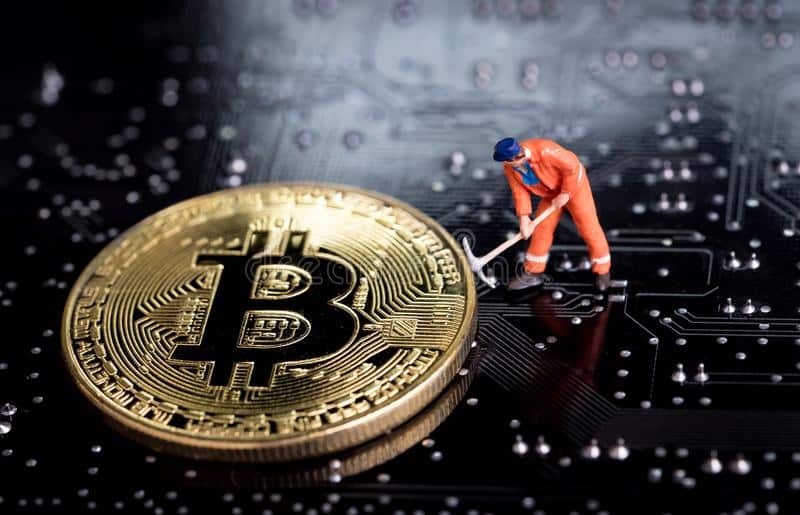
Let's get one thing straight: the methods we're about to unveil aren't actually against the law. But once you discover how absurdly simple it has become to generate cryptocurrency from thin air, you might find yourself checking for black vans parked outside your house. It just feels… too easy.
Forget the stereotype of a shadowy coder surrounded by a labyrinth of whirring machines that could double as a jet engine. The era of needing a NASA-level setup and an advanced degree to participate in digital currency extraction is officially over. Today, a few clever clicks can turn your existing hardware into a passive income engine.
This isn't a get-rich-quick fantasy, but a practical guide that demystifies the entire process of modern crypto mining. We’re pulling back the curtain on the tools and platforms that have streamlined this once-complex endeavor, turning what was a technological fortress into a welcoming front porch.
So, if you’ve ever felt like the crypto gold rush passed you by, think again. The game has changed, the barriers have crumbled, and the entry fee is little more than your curiosity. You just have to know which door to open.
For years, the mere mention of "cryptocurrency mining" conjured images of shadowy figures hunched over glowing screens, complex algorithms swirling in the ether, and server farms humming with an ominous, almost alien, intensity. It was an activity shrouded in mystique, seemingly reserved for the tech elite, the digital alchemists, or perhaps those with an illicit genius for code. Yet, beneath the layers of jargon and perceived complexity, lies a truth so remarkably straightforward, one might jokingly suggest it should be outlawed for its sheer accessibility: digital asset validation is, at its core, surprisingly simple.
This isn't to say it's a path to instant riches requiring zero effort or understanding. Rather, the barrier to entry, the actual act of getting started, is far lower than popular narrative dictates. It’s an exercise in setting up a few components, downloading some software, and letting your hardware do the heavy lifting. The real magic, and the real challenge, often lies in the strategic choices made *before* the first byte is processed. Let's pull back the curtain and demystify this intriguing corner of the digital economy.
Unraveling the Enigma: What is Digital Currency Mining, Really?
Forget the image of prospectors with pickaxes. In the digital realm, "mining" refers to the process of verifying and adding new transaction records to the blockchain ledger for a specific cryptocurrency. Imagine a vast, public, decentralized accounting book. Every time someone sends crypto, that transaction needs to be confirmed and added to a "block" of other transactions.
Miners are the diligent accountants of this decentralized system. They use specialized computing power to solve complex mathematical puzzles. The first miner to solve the puzzle gets to add the next block of transactions to the blockchain and, as a reward for their computational effort and service to the network, receives a certain amount of the cryptocurrency, along with any transaction fees associated with the verified transactions. It's a digital treasure hunt where your computer does the digging, and the prize is newly minted coins.
The Essential Toolkit: What You Actually Need to Begin
You don't need a degree in theoretical physics or access to a government supercomputer to embark on your digital prospecting journey. The fundamental requirements are surprisingly modest, though scaling for profitability is another matter entirely. Here’s a breakdown of the core components:
First, you'll need the right computing hardware. For many popular cryptocurrencies that still use a Proof-of-Work (PoW) consensus mechanism, this usually means a powerful Graphics Processing Unit (GPU), the same kind found in high-end gaming PCs. While Central Processing Units (CPUs) can technically mine some coins, their efficiency pales in comparison to GPUs. For certain highly specialized cryptocurrencies, Application-Specific Integrated Circuits (ASICs) are the kings of the hill, purpose-built machines designed solely for mining a particular algorithm with unparalleled efficiency. The key is to match your hardware to the specific digital asset you intend to pursue.
Next up is the software. This typically involves a mining program that connects your hardware to the blockchain network and a cryptocurrency wallet to securely store any earnings. Think of the mining software as your digital pickaxe and the wallet as your secured strongbox. You'll also need a stable internet connection, naturally, to communicate with the network and receive tasks. Finally, and crucially, you need a reliable, affordable source of electricity. The machines consume power, often quite a lot, and this operational cost is a significant factor in any profitability calculation.
Stepping into the Digital Mines: A Simplified Process Walkthrough
Once you’ve assembled your gear, the actual activation process is strikingly logical. It’s not quite "plug-and-play" in the strictest sense, but it’s certainly closer than the intimidating lore suggests. The journey begins with choosing a specific cryptocurrency to mine. Not all digital assets are minable, and those that are vary wildly in their difficulty and potential reward. Researching coins still amenable to individual or small-scale mining is a vital first step.
After selecting your digital quarry, the next step often involves joining a mining pool. For individual miners, going solo is akin to searching for a single grain of sand on an entire beach – possible, but exceedingly unlikely to yield results. A mining pool combines the computational power of many participants, increasing the group's chances of solving a block and earning a reward. The reward is then shared among the pool members proportionate to their contributed processing power. It’s a cooperative approach to a competitive endeavor.
Setting up your hardware entails installing drivers and configuring your machines for optimal performance. Then, you download and configure your chosen mining software, pointing it towards your selected mining pool and inputting your wallet address. This address is where any earned cryptocurrency will be sent. Finally, you start the software, and your machines begin their work, tirelessly attempting to solve those cryptographic puzzles. Monitoring your operation becomes a routine, ensuring efficiency and addressing any technical hiccups.
The Economics of the Ether: Gauging Profitability
The "so simple it should be illegal" aspect of crypto mining largely pertains to the initial setup. The true complexity, and where many aspiring miners falter, lies in navigating the economics. Is it profitable? That’s the million-dollar question, or perhaps more accurately, the several-thousand-dollar-electricity-bill question. Profitability hinges on a delicate balance of several fluctuating variables.
On the cost side, you have the initial outlay for hardware – GPUs, ASICs, power supplies, and cooling systems. This is a significant upfront investment that depreciates over time as newer, more efficient hardware emerges. Then there are the ongoing operational costs, primarily electricity. Your local utility rates can make or break a mining operation. Factor in pool fees, which are a small percentage of your earnings, and internet costs, though typically less impactful.
On the revenue side, your earnings come from block rewards and transaction fees. The value of these earnings is directly tied to the market price of the cryptocurrency you’re mining, which, as we all know, can be famously volatile. Other factors include the network difficulty – how hard the cryptographic puzzles are to solve, which adjusts over time – and your hash rate, a measure of your hardware’s processing power. A higher hash rate generally means a greater chance of contributing to a solved block within a pool, and thus a larger share of the reward. Savvy miners constantly assess these variables, using profitability calculators to make informed decisions and optimize their operations.
Beyond the Byte: Understanding the Risks and Realities
While the mechanical process of setting up a mining rig might be surprisingly straightforward, the ecosystem in which it operates is anything but static. Aspiring miners must contend with a landscape rife with volatility. The price swings of cryptocurrencies are legendary; a coin that is highly profitable to mine one week could plummet in value the next, turning a lucrative venture into a costly hobby overnight. This market unpredictability demands a robust risk tolerance and a long-term perspective.
Technological obsolescence is another ever-present shadow. The relentless march of innovation means that today’s cutting-edge mining hardware can quickly become tomorrow’s digital dust collector. Newer, more efficient ASICs or GPUs are continually released, rendering older models less competitive and less profitable. Miners must constantly evaluate whether upgrading their equipment is a financially sound decision or if it’s better to cut their losses and exit the game. It’s a perpetual arms race where only the most adaptable survive.
Moreover, the regulatory environment for cryptocurrencies remains a patchwork, with governments around the world taking varied approaches to digital assets. Changes in legislation regarding mining, energy consumption, or capital gains taxes on crypto earnings could significantly impact profitability and operational viability. Furthermore, the environmental impact of energy-intensive mining operations is a growing concern, prompting some jurisdictions to implement restrictions or outright bans. While the act of mining might be simple, navigating this complex external matrix requires foresight and continuous vigilance.
The Allure of Autonomy: Why People Still Engage in Digital Extraction
Despite the inherent risks and the constant need for optimization, the appeal of cryptocurrency mining persists, drawing individuals from diverse backgrounds into its fold. For many, it's not solely about the prospect of financial gain, though that certainly remains a powerful motivator. There's a profound sense of contributing to something larger than oneself – actively participating in the maintenance and security of a decentralized network. This feeling of ownership and direct involvement in the future of finance can be incredibly satisfying.
The thrill of earning a new block reward, even a fractional share from a mining pool, offers a tangible connection to the digital economy. It transforms an abstract concept into a concrete, albeit digital, asset in one's wallet. This direct interaction provides an unparalleled learning opportunity, demystifying blockchain technology from the inside out. Understanding the mechanics of consensus, the role of cryptography, and the intricacies of network difficulty deepens one's appreciation for the entire ecosystem.
Ultimately, mining represents a unique blend of technical challenge and entrepreneurial spirit. It embodies a form of digital autonomy, allowing individuals to leverage their resources to support a system free from traditional intermediaries. While the journey from setting up your first rig to consistently profitable operations is paved with both excitement and obstacles, the initial steps are remarkably approachable. It’s this surprising ease, this widespread accessibility to a once-esoteric domain, that leads many to joke that crypto mining is so simple, it almost feels like it shouldn't be allowed.
Conclusion: The Modern Prospector's Paradox
So, we circle back to that initial, almost conspiratorial whisper: the idea that modern crypto mining feels too simple to be true. The reality is that the mechanical process of setting up a digital currency extraction operation has indeed been demystified, stripped of its arcane complexity, and made startlingly accessible. The technical barrier to entry has been lowered from a fortress wall to a mere picket fence.
This newfound simplicity, however, is a beautiful deception. While anyone can learn to turn on the machine, the real art lies in making it run profitably. The true challenge isn't in the code, but in the calculus—weighing electricity costs against network difficulty, and market sentiment against the looming shadow of technological obsolescence. It’s a masterclass in risk management disguised as a passive income stream.
Ultimately, engaging in digital asset validation is less about a get-rich-quick scheme and more about actively participating in a financial revolution. It offers a front-row seat to the intricate dance of decentralized networks, rewarding curiosity with both potential earnings and invaluable insight. The process may be straightforward, but the journey is anything but.
The gold rush hasn't ended; it has just evolved. The pickaxe is now a graphics card, the mine is a digital pool, and the biggest treasure isn't the coin you find, but the economic savvy you forge along the way.
Post a Comment