
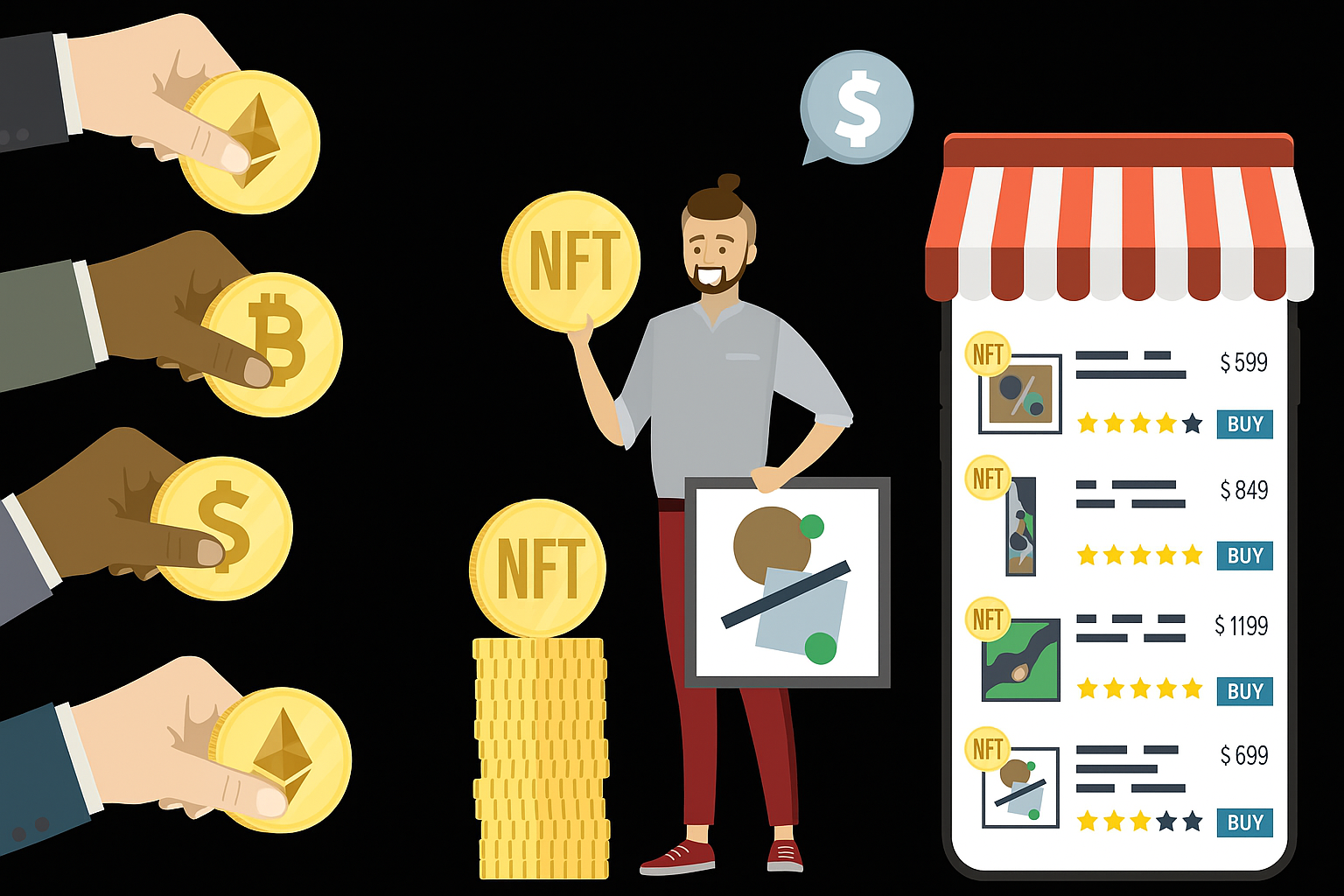
Ever felt the cold dread of an impending transaction fee looming over your digital masterpiece? Or watched your prized NFT gather virtual dust, wondering if it will ever find its forever home at a reasonable pace? The decentralized art world is a vibrant, thrilling frontier, but let's be honest, it sometimes feels less like a smooth ride to the moon and more like a toll booth every few blocks.
Hidden costs and sluggish sales can turn the exciting promise of digital ownership into an unexpected drain on your resources. It’s a common lament among both creators and collectors: navigating a marketplace shouldn’t feel like a high-stakes gamble against exorbitant charges and endlessly stalled liquidity.
But what if there was a cheat code? A definitive guide to navigating the bustling bazaars of blockchain art where your bottom line is always the priority? We’re talking about platforms where your wallet breathes a sigh of relief and your unique digital creations move with the speed of thought, not glacial network speeds.
This isn't just about finding another digital asset platform; it’s about strategically optimizing for maximum return and minimal friction. Forget those endless scrolls through high-commissioned listings and bid farewell to the agony of assets stuck in perpetual limbo. Your quest for the most cost-effective NFT marketplaces offering genuinely fast sales ends here.
Welcome to the wild, wonderful, and occasionally wallet-emptying world of NFTs. You've heard the stories: digital art changing hands for astronomical sums, collectors finding their next prized possession, and creators minting masterpieces. But behind the dazzling headlines lies a crucial, often overlooked reality: the relentless nibbling of transaction charges. These aren't mere footnotes; they're the silent assassins of your potential profit, turning a seemingly lucrative flip into a marginal gain, or worse, a net loss. For both the seasoned investor and the burgeoning artist, navigating this intricate landscape of digital assets demands more than just an eye for aesthetics; it requires a sharp focus on fiscal efficiency.
Imagine a bustling digital bazaar where every handshake, every exchange of goods, comes with a hidden tariff. That's the NFT ecosystem for many. But what if you could sidestep the exorbitant levies, ensuring more of your hard-earned capital stays precisely where it belongs—in your digital wallet? This guide isn't about finding a needle in a haystack; it's about illuminating the clear paths to platforms that prioritize your financial well-being, offering not just low costs but also the crucial advantage of rapid liquidity. Prepare to arm yourself with the knowledge to make smarter, swifter, and significantly more profitable moves in the vibrant realm of non-fungible tokens.
The Great Fee Fiasco: Why Every Penny Counts in the NFT Universe
In the high-stakes arena of digital collectibles, every fraction of a percentage point can dictate the success of your ventures. The excitement of acquiring a rare piece or the thrill of seeing your creation sell can quickly dim when the final settlement reveals a substantial portion devoured by various charges. These levies aren't uniform; they vary wildly across different blockchain networks and the diverse digital storefronts built upon them. Understanding this fiscal landscape is the first step toward reclaiming your profit margins.
Consider the cumulative impact: a series of small charges can aggregate into a significant drain over time. For a creator, high minting and listing expenses might deter experimentation or even make initial forays financially unfeasible. For a collector or trader, repeated buying and selling on costly platforms can erode capital, turning what could have been a healthy return into a break-even scenario or worse. The narrative that high fees are simply an unavoidable cost of doing business in Web3 is outdated. Savvy participants know better; they seek out the most economical routes, ensuring their digital ventures are genuinely profitable.
Decoding Transaction Costs: Understanding Gas, Sales, and Royalties
Gas Fees: The Network's Toll
Gas fees are the variable tariffs paid to the underlying blockchain network for processing your transaction. Think of it as the fuel needed for your digital car to drive on the information superhighway. On networks like Ethereum, these costs fluctuate dramatically based on network congestion. During peak times, gas can become prohibitively expensive, making small transactions uneconomical. This unpredictability is a major pain point for many users, highlighting the appeal of alternative blockchains with more stable and lower operational costs.
Marketplace Commissions: The Platform's Cut
Beyond gas, the platform where you list or purchase your NFT also takes a slice. These marketplace commissions typically range from 0% to 2.5% of the sale price. While seemingly modest, this percentage can become substantial on high-value items. Different platforms employ varied models, with some offering promotional periods of reduced commissions or even zero charges to attract users and liquidity. A meticulous examination of these rates is crucial before committing to a particular venue.
Royalty Fees: Supporting the Artists
A unique aspect of the NFT space is the concept of creator royalties. These are a percentage of secondary sales that automatically go back to the original artist or project. While not a direct cost to the buyer or seller in the traditional sense of a fee, understanding their structure is vital. For sellers, it means a portion of the sale will be automatically diverted to the creator. For buyers, it’s a mechanism to support the continued work of their favorite artists, embedding a sustainable revenue stream directly into the digital asset itself. Most platforms enforce these royalties, though there have been debates and shifts in recent times.
Top Contenders for Wallet-Friendly NFT Trading
Now that we've demystified the fee structure, let's turn our attention to the platforms that actively champion your financial interests. These marketplaces distinguish themselves by offering competitive fee structures and, often, a superior user experience that fosters swift transactions.
Magic Eden: Solana's Speed Demon and Low-Cost Champion
Magic Eden has carved out a formidable reputation as the dominant NFT marketplace on the Solana blockchain. Its appeal is multi-faceted: lightning-fast transaction speeds, significantly lower gas fees compared to Ethereum, and a clean, intuitive interface. For collectors and creators seeking an alternative to Ethereum's often-stratospheric charges, Magic Eden offers a refreshing haven. Its fixed marketplace fee, typically around 2%, combined with Solana's minimal network costs, makes it an incredibly attractive option for high-volume trading and new mints. It's particularly popular for gaming NFTs and digital collectibles, benefiting from Solana's robust throughput and developer-friendly environment.
OpenSea (Polygon & Arbitrum): Expanding Horizons Beyond Ethereum's Heft
While OpenSea is synonymous with Ethereum, its embrace of Layer 2 solutions like Polygon and Arbitrum has fundamentally changed its cost dynamics. By opting to trade NFTs on these scaling networks through OpenSea, users can dramatically reduce their gas fees. Polygon, for instance, offers near-zero transaction costs and impressive speed, making it an excellent choice for a wider array of NFT projects and enabling more frequent, smaller-value transactions without the crushing burden of Ethereum gas. Arbitrum, another prominent Layer 2, similarly provides a high-speed, low-cost environment, proving that the largest marketplace is not always the most expensive, provided you choose the right network within it.
LooksRare & X2Y2: Empowering Traders with Rewards and Reduced Fees
Born out of a desire to challenge OpenSea's dominance and distribute more value back to users, LooksRare and X2Y2 offer compelling alternatives, particularly for active traders. These platforms often boast lower base marketplace fees, sometimes as low as 0.5% to 1.5%, and innovate with "incentivized trading" models. This typically involves users earning native tokens (like LOOKS or X2Y2) for trading volume. While the direct fee might be slightly higher than zero-fee platforms, the potential for token rewards can significantly offset or even exceed these costs, effectively creating a negative fee scenario for highly engaged traders. They cultivate a community-centric approach, appealing to those who want a more equitable share of the ecosystem's value.
Blur: The Pro Trader's Playground for Liquidity and Efficiency
Blur arrived on the scene with a clear mission: to cater to professional traders and those seeking maximum liquidity and speed. It operates as an NFT aggregator, pulling listings from various marketplaces and offering a sophisticated suite of tools for rapid bidding, listing, and portfolio management. Crucially, Blur often features 0% marketplace fees on its own platform, focusing instead on volume and providing an unparalleled trading experience. Its innovative loyalty program and airdrops have also attracted a substantial user base, particularly those dealing in high-value collections. For individuals who prioritize swift execution and minimal overhead, Blur represents a paradigm shift in how digital assets are traded at scale.
Beyond the Fees: Prioritizing Speed and Liquidity
While low charges are undeniably attractive, they only tell half the story. The true mark of an exceptional NFT marketplace lies in its ability to facilitate fast sales and provide deep liquidity. An NFT isn't truly an asset until it can be readily converted into another form of value. A marketplace with rock-bottom fees but a barren order book is a false economy; your digital masterpiece might be listed cheaply, but it could languish unsold indefinitely.
High liquidity means there are always eager buyers and sellers, ensuring your asset can find its market price swiftly. This is especially vital in rapidly moving markets where timing is everything. A swift transaction can mean the difference between capitalizing on a trend and missing out entirely. Platforms that prioritize network speed, offer sophisticated bidding mechanisms, and attract a large, active user base naturally foster environments where digital art and collectibles move quickly from one owner to the next. Look for vibrant communities, active chat channels, and robust analytics that indicate a healthy, bustling trading environment.
Smart Strategies for Savvy NFT Investors and Creators
Navigating the complex world of NFTs requires more than just knowing which platforms offer the lowest fees; it demands a strategic approach to every decision. For investors and creators alike, adopting clever tactics can further amplify the benefits of cost-efficient marketplaces.
Choose Your Network Wisely: Don't blindly mint or list on Ethereum if your project doesn't strictly require its unparalleled security or prestige. For many applications, particularly gaming or utility NFTs, a Layer 2 solution or an alternative blockchain like Solana offers a significantly better cost-to-performance ratio. Assess your needs against network capabilities.
Time Your Transactions: If you must use a network with variable gas fees (like Ethereum), monitor gas price trackers. Executing transactions during off-peak hours (often late night or early morning UTC) can result in substantial savings on network charges. Patience, in this case, truly is a virtue.
Leverage Aggregator Platforms: Tools like Blur aren't just for listing; they allow you to view listings across multiple marketplaces simultaneously. This enables you to spot the best deals and ensures your own listings gain wider visibility, potentially accelerating a sale. They are the ultimate comparison shopping tool for digital assets.
Understand Royalty Structures: Before buying, understand the royalty percentage applied to secondary sales. As a seller, be aware that a portion of your sale will be directed to the creator, so factor this into your pricing strategy. For creators, setting a reasonable royalty can foster long-term revenue without deterring collectors.
Batch Transactions When Possible: Some platforms or smart contracts allow for "batching" multiple actions into a single transaction. While not always applicable, when it is, it can significantly reduce total gas fees by consolidating multiple operations under one network charge. Always explore if this option is available for your specific use case.
Future-Proofing Your NFT Portfolio: Emerging Trends in Cost Efficiency
The digital asset landscape is in a constant state of evolution, with innovation driving improvements in scalability and cost-effectiveness. The quest for faster, cheaper, and more efficient NFT transactions is far from over. We're witnessing the continuous development of new Layer 2 scaling solutions, advancements in zero-knowledge rollups, and the emergence of application-specific blockchains tailored for specific use cases, all designed to minimize transaction overheads.
Staying informed about these technological breakthroughs is paramount. As new protocols mature and gain adoption, the definition of a "low-fee" marketplace may shift. The underlying principle, however, remains constant: the most successful participants will be those who actively seek out the most efficient avenues for their digital asset activities. By embracing platforms that prioritize your wallet and facilitate rapid liquidity, you're not just making smart choices today; you're future-proofing your entire NFT strategy against an ever-changing digital frontier.
So, you've journeyed through the labyrinthine world of digital ownership, deciphering the cryptic scrolls of gas fees and dodging the ubiquitous tolls of transaction costs. No longer will your digital masterworks gather virtual dust while your wallet weeps in silence. We've unearthed the digital oases where your cherished NFTs don't just exist; they thrive, trading hands with the efficiency they truly deserve.
Armed with insights into the leanest, most liquid marketplaces, you’re now poised to make every mint, every trade, and every acquisition count. From Solana's swift streams to Ethereum's scaled-up solutions, and the trader-centric havens, the power to preserve your capital and accelerate your sales is firmly in your grasp. This isn't just about saving a few digital pennies; it's about fundamentally altering your approach to the vibrant, yet often volatile, blockchain art market.
The decentralized frontier continues its relentless march forward, promising even more innovative solutions to today's financial frictions. By integrating these savvy strategies and staying attuned to emerging trends, you're not just participating in the NFT revolution; you're orchestrating your own profitable path. So go forth, discerning digital visionary, and mint your future – affordably, efficiently, and with a significantly lighter touch on your precious digital purse strings.
Image source: Zipmex
Post a Comment